

Singapore Buddhist Calendar

2026 AD ( 2570 BE ) ACTIVITIES
- Graduated from the National University of Malaysia in 1993 with an Honours Bachelor's degree in Humanities and Social Sciences (Psychology).
- Ordained as a monk in 1996.
- Graduated from the Advanced Programme of the Malaysian Buddhist Institute in 1998.
- Previously served as a Buddhist Studies lecturer at the Malaysian Buddhist Institute.
- Is also a Dharma heir in the Chan (Zen) tradition of Venerable Ji Cheng.
Currently, Venerable Ji Chi actively teaches the Dharma at universities throughout Malaysia and frequently conducts Buddhist living camps and Chan (Zen) meditation retreats.
Admission is FREE
Everyone is warmly welcome to attend, share in the Dharma, and cultivate wisdom.
Direct Bus Services
80, 82, 87, 88, 89, 119
Nearby Bus Services
62, 74, 102, 113, 136, 147, 325
Nearest MRT Station
Buangkok MRT Station (NE15)
Contact
📞 6489 8161
✉️ fhbcc@fhbcc.org.sg
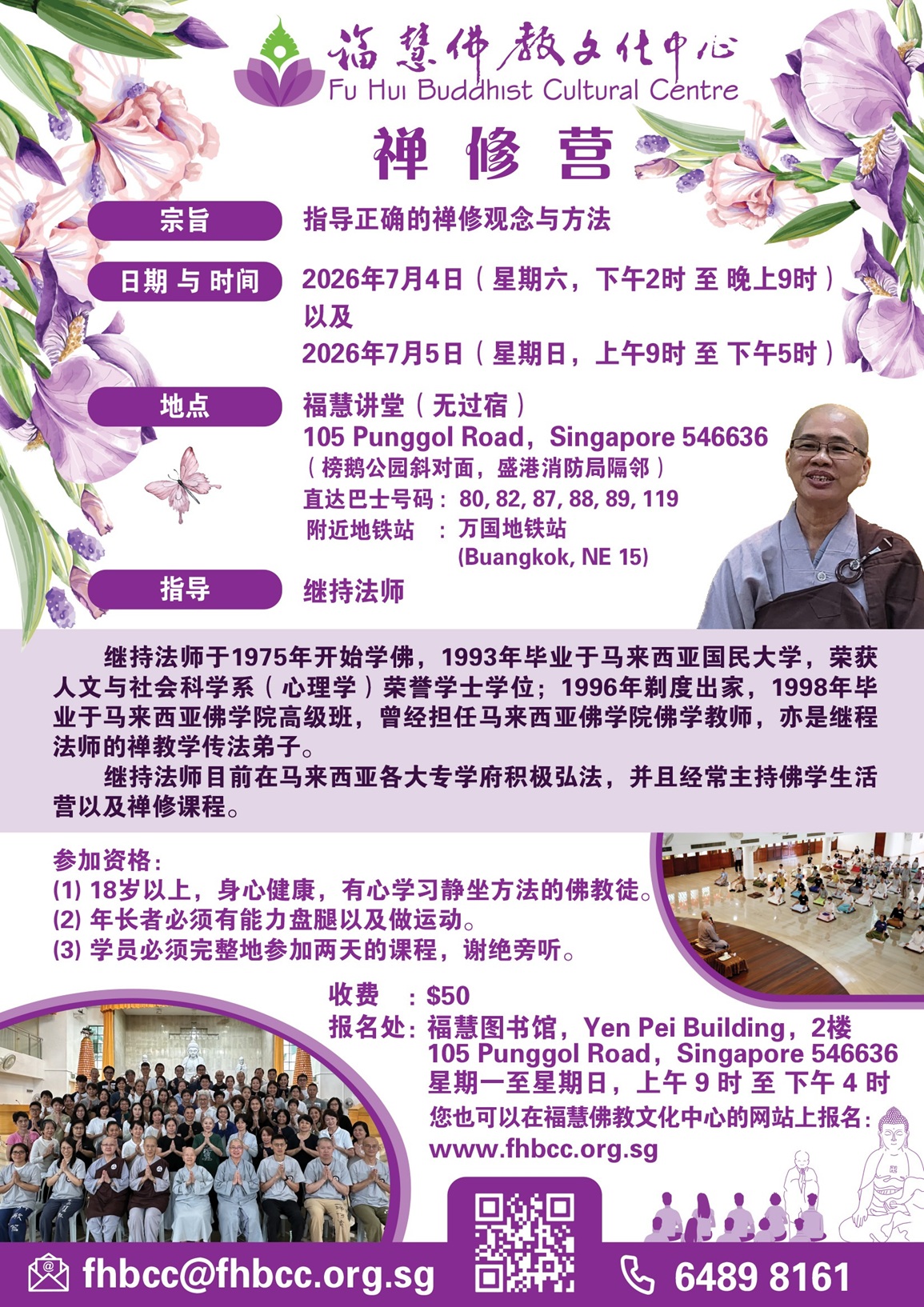
Chan (Zen) Meditation Retreat
Purpose
To provide guidance on the correct principles and methods of Chan (Zen) meditation practice.
Date & Time
Saturday, 4 July 2026
2:00 PM – 9:00 PM
Sunday, 5 July 2026
9:00 AM – 5:00 PM
Venue
Fu Hui Lecture Hall (No accommodation provided)
105 Punggol Road
Singapore 546636
(Opposite Punggol Park, beside the SCDF Punggol Fire Station)
Direct Bus Services: 80, 82, 87, 88, 89, 119
Nearest MRT Station:
Buangkok MRT Station (NE15)
Instructor
Speaker
Venerable Ji Chi (继持法师)
Venerable Ji Chi began studying Buddhism in 1975.
- Graduated from the National University of Malaysia in 1993 with an Honours Bachelor's degree in Humanities and Social Sciences (Psychology).
- Ordained as a monk in 1996.
- Graduated from the Advanced Programme of the Malaysian Buddhist Institute in 1998.
- Previously served as a Buddhist Studies lecturer at the Malaysian Buddhist Institute.
- Is also a Dharma heir in the Chan (Zen) tradition of Venerable Ji Cheng.
Currently, Venerable Ji Chi actively teaches the Dharma at universities throughout Malaysia and frequently conducts Buddhist living camps and Chan (Zen) meditation retreats.
Eligibility
1. 18 years old or above, physically and mentally healthy, and sincerely interested in learning Chan (Zen) meditation.
2. Elderly participants should be able to sit cross-legged and perform light physical movements.
3. Participants must attend the entire two-day programme. Auditing or partial attendance is not permitted.
Course Fee
S$50
Registration
Fu Hui Library
Yen Pei Building, Level 2
105 Punggol Road
Singapore 546636
Registration Hours
Monday to Sunday
9:00 AM – 4:00 PM
You may also register online through the Fu Hui Buddhist Cultural Centre website: www.fhbcc.org.sg
Contact
📧 fhbcc@fhbcc.org.sg
📞 6489 8161All are welcome - Recognise the possible different reasons why burning paper money became a tradition. Understand that there may be more than one reason. For example read Mothership.sg’s take on it here
- Though one may have more knowledge on Ghost Month, do not seek to aggressively change other’s behaviour (e.g. burning paper money). Instead, start a conversation to understand why others perform certain rituals. At times, being kind is better than being right. Sharing at the right time matters too!
- When walking past burning paper and effigies during this month, reflect on the impermanence of all our possessions
All are welcome - 7:00 pm – 7:15 pm : Optional Q&A (1)
- 7:15 pm – 9:45 pm : Lesson
- 9:45 pm – 10:00 pm : Optional Q&A (2)
Venue: Oasis 3 @ Level 3, 51 Cuppage Road, S229469 (tall beige building behind Centrepoint; nearest MRT: Somerset)
Register: tinyurl.com/pureland11
Enquiries: dharmacourses@gmail.com
Teacher: Shen Shi'an, MA (Buddhist Studies)
Fee: Sponsored (80 limited seats)All are welcome
| July | August |
| DATE | VENUE | ACTIVITIES |
| Jul 01 to Jul 19 | By Fu Hui Buddhist Cultural Centre | 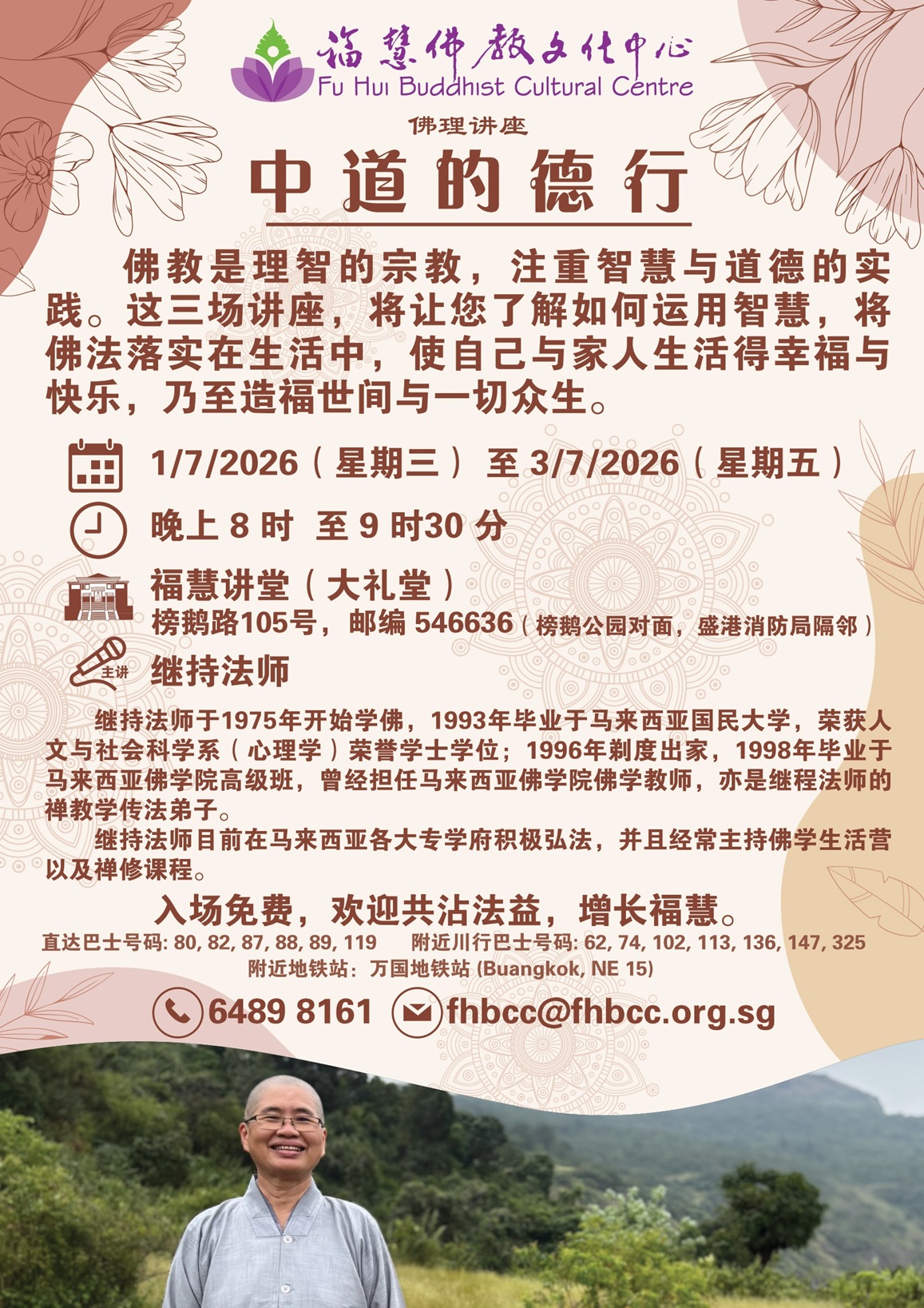 Buddhist Dharma Talk The Virtuous Conduct of the Middle Way (中道的德行) Buddhism is a religion of wisdom that emphasizes both wisdom and ethical conduct. These three Dharma talks will help you understand how to apply wisdom in daily life, putting the Buddha's teachings into practice so that you and your family can live with happiness and well-being, while also bringing blessings to society and all sentient beings. Date 1 July 2026 (Wednesday) – 3 July 2026 (Friday) Time 8:00 PM – 9:30 PM Venue Fu Hui Lecture Hall (Main Hall) 105 Punggol Road, Singapore 546636 (Opposite Punggol Park, beside Singaore Civil Defence Force (SCDF) Punggol Fire Station) Speaker Venerable Ji Chi (继持法师) Venerable Ji Chi began studying Buddhism in 1975. |
| Jul 18 to Jul 19 | By Buddhist Fellowship | 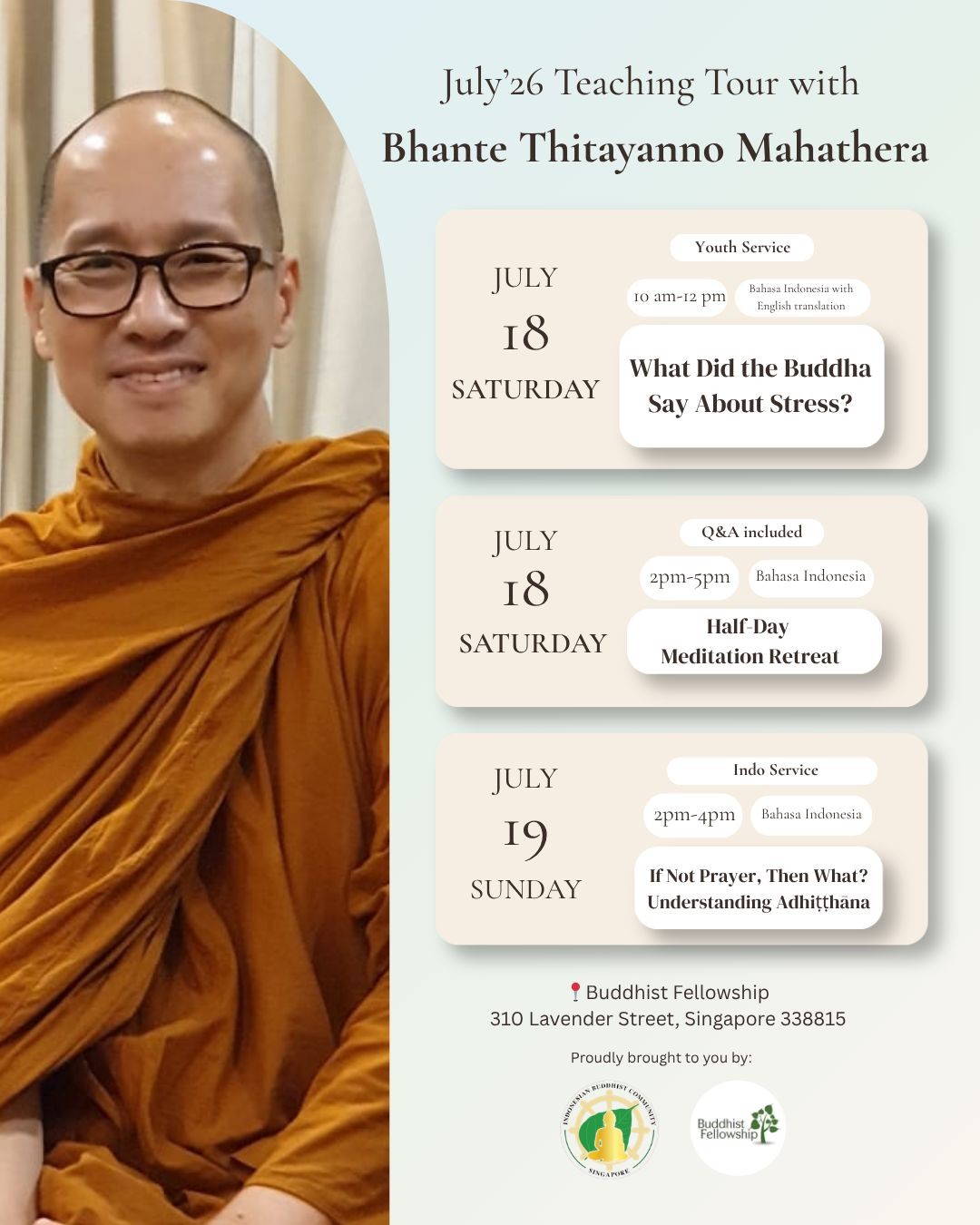 Buddhist Fellowship Lavender : 310 Lavender Street Singapore 338815 Buddhist Fellowship East Centre @Mitra : Mitra @ Orion Building, 160 Paya Lebar Road, #08-03, Singapore 409022 Website : http://www.buddhistfellowship.org Email :info@buddhistfellowship.org Map 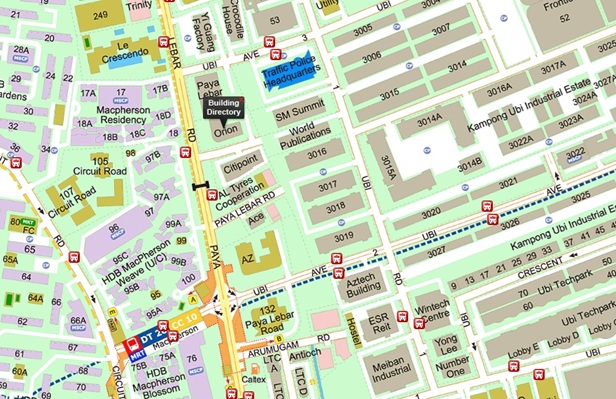 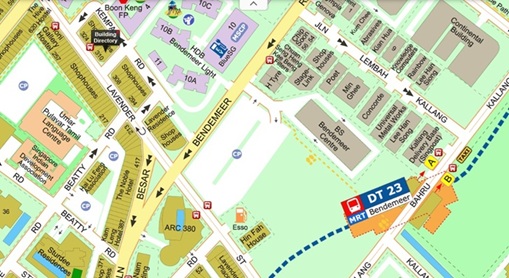 |
| Jul 18 to Jul 19 | Poh Ming Tse Temple. By Institute of Chinese Buddhism | 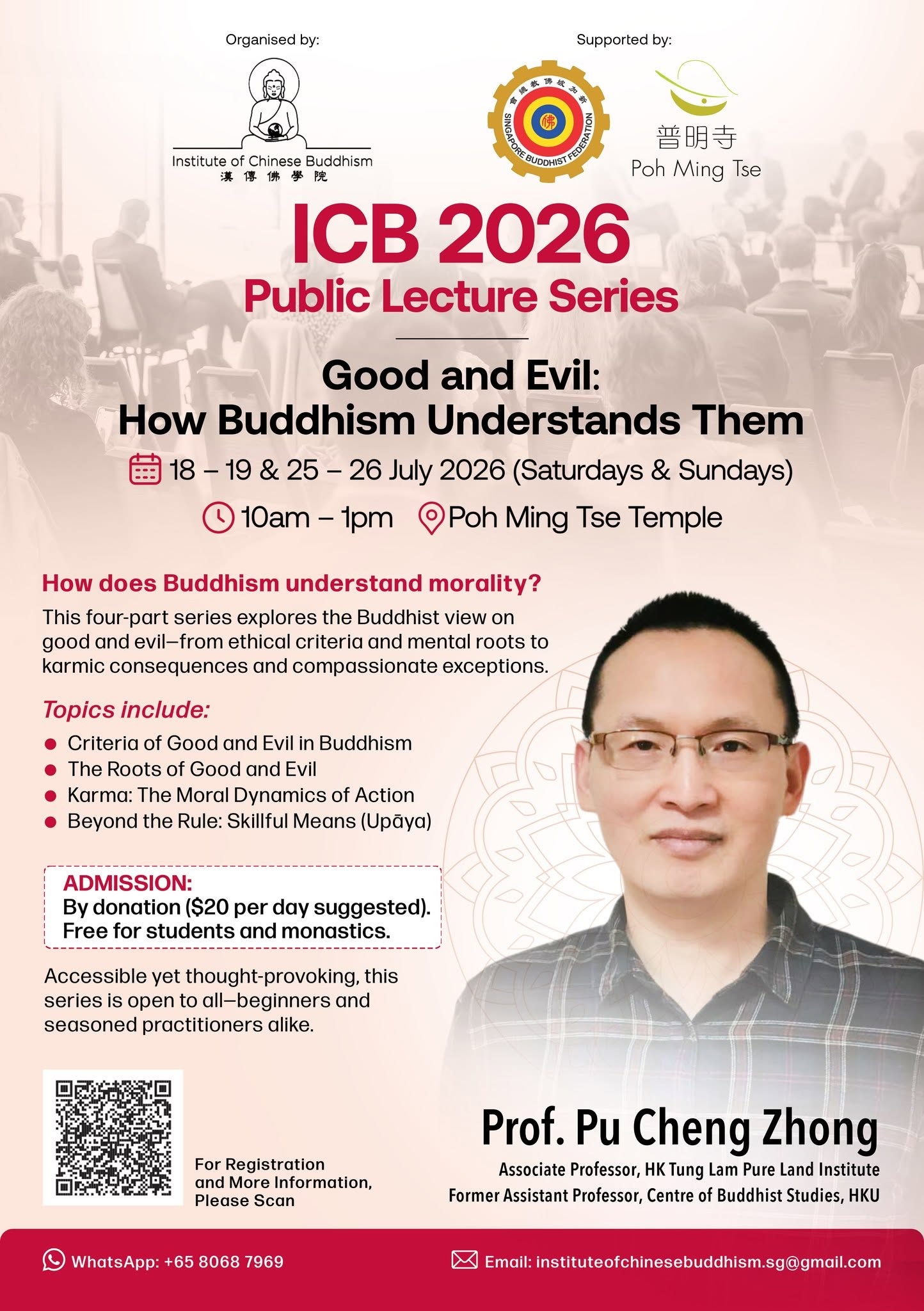 Join Prof. Pu Cheng Zhong for a thought-provoking 4-part lecture series exploring Buddhist perspectives on karma, compassion, ethics, and personal transformation. Venue: Poh Ming Tse Temple Time: 10:00 AM – 1:00 PM Date: 18–19 & 25–26 July 2026 Book here now |
| DATE | VENUE | ACTIVITIES | Aug 27 | Full Moon of the Chinese Seventh Month |  Artical by Nalanda Institute, Malaysia. Reproduced here for intellectual discussion ONLY During a funeral ceremony in ancient China, paper-made models of houses, sedan chairs, treasure chests, clothes, daily utensils, and even effigies of servants, were burnt as the cortege was leaving home for burial in the cemetery. The original meaning of such an act is to show everyone present that all former possessions of the deceased cannot be brought along to the next life. At one’s death, everything one had ever owned has to be left behind. The burning only emphasizes this message, as it is the most graphical, symbolic, and dramatic way of showing total loss! There is a Chinese saying that ‘no possessions can be brought along to the next existence; the only thing that follows one is his deeds, or ‘kamma’ ‘ ( 万般带不去,唯有业随身 ). Furthermore, his relatives and friends only follow the deceased up to the grave, but soon turn to go home, leaving the dead alone in his tomb! Thus, the burning of cheaply-produced paper models and effigies served as an effective educational tool. Witnessing how fire consumes every ‘former possession’ of the deceased, even an illiterate peasant or young child was able to understand this sense of total relinquishment at death. Today, this practice is completely misunderstood by the majority of Chinese. Instead of the original meaning, paper-made models have been turned into “paper offerings” – with the mistaken thought that whatever one burns, his departed relatives will obtain in the netherworld! Hence people nowadays burn paper models of the latest i-Pads, smartphones, LED screens, and “paper money” in inflated sums in order to please the dead. All these will not help the departed ones at all. In fact, this misunderstanding will only harm the living by maintaining their ignorance and delusions. Many people assume that whatever is fancied in life is also fancied in the netherworld. Instead of burning “paper offerings”, one can perform ‘Dedication of Merits’ (Pāli, ‘Pattidāna ’) to help their departed relatives. Wise Steps: |
Aug 27 | Full Moon of the Chinese Seventh Month |
| Aug 24 to Oct 05 | By Kong Meng San Phor Kark See Monastery |  As death is eventual and it can be sudden, it is of utmost importance and urgency to prepare how to handle it – for ourselves, family, friends and even acquaintances. It is during the crucial moments before death that our right efforts can facilitate a smooth and blissful transition to a good rebirth too. Using inspiring real-life examples, indispensable skills will be shared. Topics Include: How to urge aspiration to reach Pure Land? What are the most skilful pre & post-death practices? How to help the unconscious? Should I go for organ donation? Should I have Advanced Medical Directive? How to use Rebirth Blanket & Blessed Sand? And much more during Q&A sessions A guidebook with translation of the 13th Pure Land Patriarch Great Master Yinguang’s ‘Three Great Essentials When Approaching Death (For Birth In Pure Land)’ will be provided free as a key study text after. Dates: 24 Aug – 5 Oct 2026 (7 Mondays) Time: |

 Return to Singapore Dharma Net Homepage